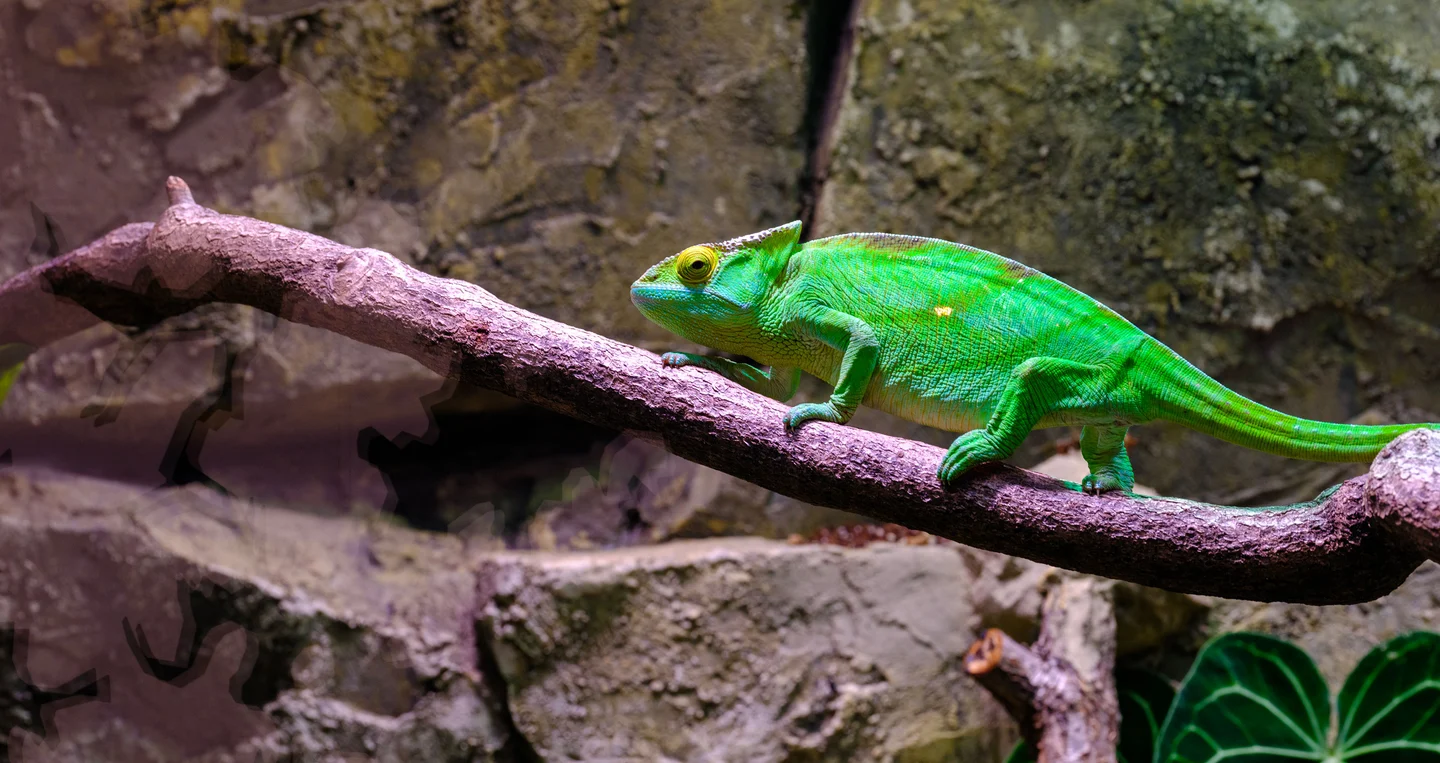
Light with a biological role
UVB can support vitamin D3 production in the skin of many reptiles. After processing in the liver and kidneys, vitamin D helps regulate calcium metabolism. Diet, species and health also matter; lighting does not replace appropriate nutrition or veterinary care.
Exposure starts with the habitat
Natural UV exposure differs between species and habitats. Provide an accessible illuminated area and shaded retreats so the animal can move between them. Measure the distance to the highest reachable perch. Mesh, placement and overlapping beams can change exposure.
Choose and check the installation
SOLAR integrates UVB, UVA and visible light. UVB Focus positions a dedicated UVB source separately. Compare the model tables at the actual distance, then check the installed habitat with suitable UV measuring equipment. A wavelength or wattage alone cannot establish a safe dose.